Why sugar-free drinks are growing: what is behind the trend in the UAE
Updated 25 October 2026
Note: There is a business connection between the operator of this site and LUVA: a person behind vergleichcheck.com has been the registered manager of LUVA Nutrition Concepts Trading L.L.C S.O.C since 22 October 2026 (not a shareholder). Links to luvanutrition.ae lead to LUVA's own shop.
The numbers behind the trend
The UAE Ministry of Health and Prevention (MoHAP) published the results of its National Health and Nutrition Survey. For adults aged 18 to 69 it reports:
- 27.4% consume sugar-sweetened beverages daily
- 27.3% exceed the recommended sugar intake
- 22.4% of adults aged 18+ are living with obesity
Source: MoHAP. These are survey results, not a judgement on any single drink. They show why many households now look at what is in their glass.
What the WHO recommends
The World Health Organization recommends that adults and children keep free sugars below 10% of total energy intake, with a further reduction below 5% for additional benefits (WHO guideline on sugars). Free sugars include sugar added to drinks. On a 2,000 kilocalories day, 10% is 200 kilocalories, which is about 50 g of sugar (our calculation at 4 kcal per gram).
One 330 ml can of regular cola with 10.6 g sugar per 100 ml (as stated by Coca-Cola GB) has about 35 g of sugar. That is around 70% of the 50 g figure in a single drink.
Why people switch: taste stays, sugar goes
- Taste without the sugar: sugar-free drinks keep the flavour people like.
- Water first: a few millilitres of syrup turn plain or sparkling water into a flavoured drink.
- Schools: UAE authorities promote healthy nutrition in schools (u.ae), so many parents look at drinks at home too.
- Heat: in the UAE climate people drink a lot; what is in each glass adds up.
A note on sweeteners
Sugar-free drinks use sweeteners. In 2023 the WHO advised against using non-sugar sweeteners for weight control (WHO). That is not a safety verdict; it means sugar-free drinks are a swap for taste, not a diet tool. We make no health promises on this page.
Where sugar-free syrup fits
Drink syrups are concentrated: you add a small amount to water. That makes them cheap per glass and easy to store. See our guide on how to use sugar-free syrup and the German mass market for sugar-free syrup.
Frequently asked questions
Why are sugar-free drinks so popular?
They keep the taste of a sweet drink while removing the sugar from that glass. In the UAE, 27.4% of adults drink sugar-sweetened beverages daily (MoHAP), so a swap is an easy step for many people.
How much sugar does the WHO recommend?
The WHO recommends free sugars below 10% of total energy intake, ideally below 5%. On 2,000 kilocalories, 10% is about 50 g of sugar.
Do sugar-free drinks still contain calories?
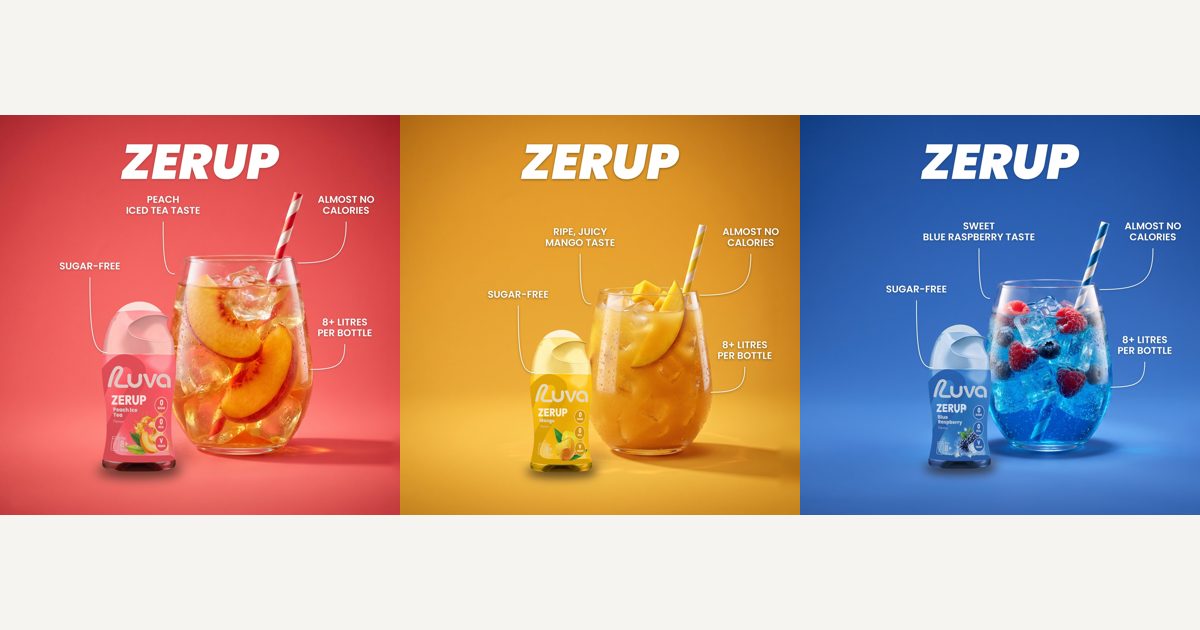
Often a few. ZERUP, for example, is sugar-free with approx. 2–3 kcal per 100 ml prepared drink. Check the label of any drink.
Do sugar-free drinks help with weight?
We make no such claim. The WHO advises against using non-sugar sweeteners for weight control.
Where can I buy ZERUP in the UAE?
On luvanutrition.ae. The UAE launch is on 5 November 2026; the collection lists all 10 flavours.
Related guides: Sugar in drinks: sugar saved per year · How to use sugar-free syrup · Sugar-free syrup in Germany · Childhood overweight in the UAE
Research date: 25 October 2026. ZERUP product details and prices are quoted from luvanutrition.ae as published in October 2026. Figures from More Nutrition are company statements, not market data. No tests, ratings or reviews are invented on this page. This is general information, not medical or nutrition advice; for questions about your own or your child's health, talk to a doctor.
Sources
- UAE Ministry of Health and Prevention: National Health and Nutrition Survey results
- WHO guideline: sugars intake for adults and children (2015)
- WHO (2023): advice not to use non-sugar sweeteners for weight control
- UAE Government portal: healthy nutrition in schools
- Coca-Cola GB: Coca-Cola Original Taste nutrition (10.6 g sugar per 100 ml)
- LUVA: ZERUP collection (10 flavours, prices)